Mastering the Art Nouveau Hibiscus Floral Pattern for Modern Design
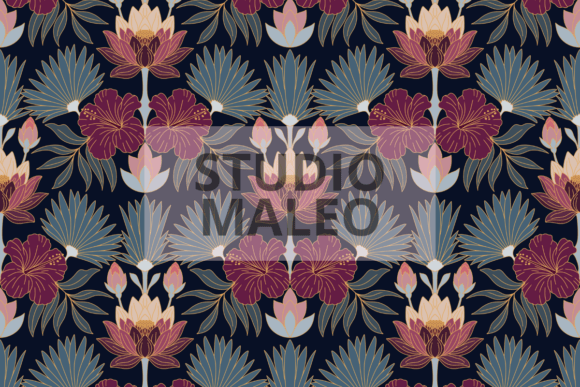
The resurgence of historical aesthetics in modern design has brought the Art Nouveau Hibiscus Floral Pattern back into the spotlight, captivating designers and homeowners alike. This style is not merely a repetition of flowers; it is a sophisticated interplay of organic lines, dramatic shading, and rich color palettes that evoke the elegance of the late 19th century while feeling surprisingly contemporary. When executed correctly, featuring deep plum, burgundy, navy, and muted gold tones, this aesthetic transforms ordinary surfaces into statements of luxury. However, integrating such a specific and detailed style into apparel, sublimation, textiles, or upholstery requires more than just downloading an image. Many creators rush into production without understanding the nuances of scale, resolution, and color fidelity, leading to results that look muddy rather than majestic.
One of the most frequent misunderstandings involves the complexity of the Dark Art Nouveau botanical repeat. Beginners often assume that because the style is historical, any vintage-looking flower will suffice. In reality, true Art Nouveau is defined by its whiplash curves and the seamless integration of elements like hibiscus, lotus, and palm leaves. A common mistake is selecting a pattern where these elements feel disjointed or where the flow is interrupted by harsh edges. When applied to large-scale projects like curtains or sofa upholstery, these breaks in continuity become glaringly obvious, destroying the immersive quality of the design. To avoid this, always examine the repeat tile closely before committing to a purchase or download. Look for how the palm leaves bridge the gap between the bold hibiscus blooms and the delicate lotus flowers; the transition should be invisible to the naked eye.
Navigating Color Complexity in Dark Botanicals
The allure of this specific pattern lies heavily in its moody, sophisticated palette. The combination of rich plum, burgundy, and navy against muted gold creates a sense of depth that lighter patterns cannot achieve. Yet, this darkness is also where many projects fail. A significant error occurs when designers ignore the limitations of their printing method regarding dark inks. For instance, in sublimation printing, achieving a true, deep navy or a velvety plum on polyester fabric can be tricky. If the source file is not optimized, these dark areas may print as flat black, losing the subtle gradients and the shimmer of the muted gold accents. This flattening effect strips the design of its three-dimensional quality, making the expensive-looking gold details appear dull or gray.
To ensure the Art Nouveau Hibiscus Floral Pattern retains its intended elegance, you must verify the color profile of your digital assets. Screens display colors in RGB, which is additive and bright, whereas printers use CMYK or specific dye-sublimation profiles that are subtractive. Relying solely on what you see on your monitor is a recipe for disappointment. Always request a physical swatch or a test print if you are buying fabric by the yard. If you are a digital creator selling these designs, provide clear mockups that simulate the print outcome rather than just the screen view. This transparency builds trust with your clients and prevents the frustration of receiving a product that looks nothing like the advertisement.
Scale and Application: Avoiding the "Busy" Trap
Another critical factor often overlooked is the scale of the pattern relative to the end product. The intricate details of hibiscus petals and twisting vines are beautiful, but they can become visual noise if the scale is wrong. A pattern that looks breathtaking on a smartphone screen or a small throw pillow might look chaotic and overwhelming when printed on a full-length dress or a wide expanse of wallpaper. Conversely, scaling the image up too much to fit a large wall can result in pixelation if the original file resolution is insufficient. This leads to jagged edges on those fine gold lines, instantly dating the project and lowering its perceived value.
When evaluating a design for different applications, consider the viewing distance. For apparel, where the viewer is close, finer details work well. For home accents like upholstery or large drapes, the motif needs to be larger so the eye can rest on the shapes rather than getting lost in a blur of color. A practical approach is to visualize the pattern at 100% size on your intended medium before finalizing. If the hibiscus flowers disappear into the background or if the lotus leaves look like indistinct blobs, the scale needs adjustment. Remember, the goal of Art Nouveau is organic harmony, not visual clutter.
- Check Resolution Early: Ensure your files are at least 300 DPI for print to maintain the crispness of the muted gold lines.
- Test Color Fastness: For textiles and apparel, verify that the deep burgundy and navy dyes are colorfast to prevent bleeding during washing.
- Assess Repeat Continuity: Zoom out to see the full repeat; the flow from palm leaves to flowers should feel natural and unbroken.
- Consider the Substrate: Dark patterns behave differently on silk versus cotton or matte paper versus glossy vinyl; adjust expectations accordingly.
Entrepreneurs and small business owners should also be wary of licensing pitfalls. The popularity of the Dark Art Nouveau botanical repeat means there are many derivatives available online, but not all are cleared for commercial use. Using a pattern found on a free stock site for a line of high-end upholstery can lead to legal issues and brand damage if the original artist claims infringement. Always trace the source of your design. Investing in a premium, licensed asset or commissioning a custom variation ensures that your final product is unique and legally secure. This due diligence protects your reputation and guarantees that your customers are receiving an authentic, high-quality item.
Ultimately, the success of using an Art Nouveau Hibiscus Floral Pattern depends on respecting the intricacy of the style. It is a design language that speaks of nature, movement, and luxury. By paying attention to the technical details of color management, scale, and resolution, and by choosing your sources wisely, you can avoid the common pitfalls that plague many DIY and professional projects. Whether you are creating a stunning piece of apparel or refreshing a living room with sophisticated wallpaper, taking the time to evaluate these factors will result in a finished product that truly honors the beauty of the Art Nouveau tradition. Let the rich hues and flowing lines elevate your work, ensuring that every petal and leaf contributes to a cohesive and stunning visual experience.