Bringing the Barnyard Inside: A Complete Guide to Farmhouse Chicken Seamless Patterns
The allure of the countryside has never truly faded from our collective imagination. In an era defined by rapid technological advancement and urban living, there is a profound comfort found in returning to simpler aesthetics. This desire for tranquility and nostalgia is perfectly encapsulated in the farmhouse chicken seamless pattern. More than just a decorative motif featuring soft watercolor hens and chicks, this design represents a bridge between vintage charm and modern interior styling. Whether you are a professional surface pattern designer, a scrapbooking enthusiast, or a homeowner looking to refresh your kitchen decor, understanding the nuances of this rustic country repeat can transform your creative projects.
Defining the Aesthetic: What Makes a Pattern "Farmhouse"?
To truly appreciate the value of a shabby chic kitchen design centered around poultry motifs, one must first understand the core elements of the farmhouse aesthetic. At its heart, farmhouse style is about warmth, functionality, and a connection to nature. It rejects the sterile minimalism of modern industrial design in favor of textures that feel lived-in and loved.
A high-quality farmhouse chicken seamless pattern typically incorporates specific visual cues that trigger this sense of cozy familiarity. These include:
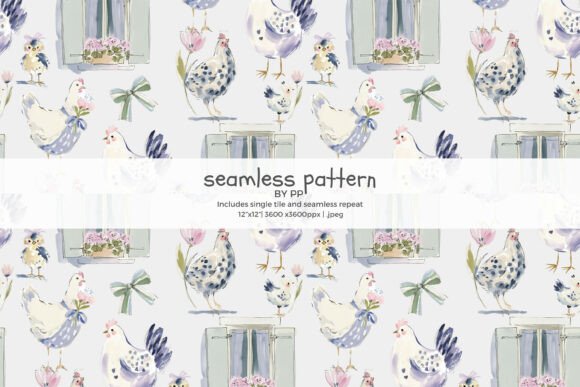
- Soft Watercolor Textures: Unlike sharp vector graphics, watercolor effects provide an organic, hand-painted feel that mimics traditional artisanal methods.
- Rustic Motifs: Beyond the obvious hens and chicks, these patterns often feature bows, cottage window details, and floral accents that suggest a garden setting.
- Muted Color Palettes: Think creamy whites, sage greens, dusty roses, and warm browns rather than neon or overly saturated hues.
When these elements are arranged in a rustic country repeat, they create a visual rhythm that is soothing to the eye. The "seamless" nature of the design ensures that when the pattern is tiled, there are no visible breaks or awkward edges, allowing the imagery to flow infinitely across any surface.
The Technical Foundation: Understanding Digital Paper Specifications
For those new to digital design or printing, the technical specifications of a pattern file can seem daunting. However, grasping these basics is crucial for ensuring your final product looks professional. The standard for high-quality print projects, such as the 12x12 jpeg digital paper described in many premium collections, relies on specific resolution and format standards.
Consider a typical high-resolution file offered in this niche. You will often receive two distinct versions to maximize versatility:
- The Single Tile: This is the fundamental building block of the pattern. It contains the unique arrangement of hens, bows, and windows that, when repeated, creates the larger image.
- The Seamlessly Repeated Version: This file usually combines multiple tiles (often four) to show you exactly how the pattern looks when extended. It helps visualize the scale and flow of the design.
Both versions are typically sized at 12 inches by 12 inches with a resolution of 300 DPI (dots per inch). Why is 300 DPI so important? In the world of printing, 72 DPI is standard for screens, but it results in pixelated, blurry images when printed on physical media. A 300 DPI file ensures that every watercolor stroke and feather detail remains crisp, whether you are printing on fabric, cardstock, or wallpaper. Furthermore, these files are usually provided in the JPEG format. While PNGs offer transparency, it is important to note that many rustic patterns do not have a transparent background; instead, they feature a solid or textured base color that contributes to the overall vintage look.
Practical Applications: From Scrapbooking to Surface Design
The versatility of a country cottage aesthetic pattern extends far beyond simple decoration. Its application spans various industries and hobbies, proving that a well-designed motif is a powerful tool for creativity and branding.
Home Decor and Interior Design
In the realm of home improvement, these patterns are experiencing a renaissance. The cozy kitchen style is particularly popular for creating accent walls, backsplashes, or custom cabinet liners. Imagine opening a cupboard to reveal a delightful scene of watercolor chicks and cottage windows; it adds a layer of personality that mass-produced laminates cannot achieve. Additionally, these designs are perfect for DIY fabric projects. By using print-on-demand services, users can transfer these digital papers onto cotton or linen to create throw pillows, table runners, or even full curtains that embody the spirit of rural living.
Scrapbooking and Paper Crafts
For the crafting community, the 12x12 digital paper format is the gold standard. Scrapbookers use these backgrounds to document family histories, baby albums, or travel journals. The imagery of hens and chicks is particularly poignant for documenting springtime events, Easter celebrations, or family gatherings at a farm. Because the pattern is seamless, crafters can print multiple sheets and align them to create large backdrops for layouts without worrying about mismatched seams. The inclusion of elements like bows and flowers also provides ready-made embellishments that can be cut out and layered onto pages.
Branding and Business Identity
Beyond personal hobbies, this aesthetic holds significant value for small businesses. Artisanal bakeries, organic egg farms, and boutique cafes often seek a rustic branding identity to communicate freshness and authenticity. A beautiful seamless farm pattern can be licensed and applied to packaging, napkins, shopping bags, and menu covers. It tells a story before the customer even reads a word, suggesting that the products are homemade, natural, and rooted in tradition. For entrepreneurs, investing in high-quality, 300 DPI assets ensures that their brand materials look professional across all mediums, from business cards to large signage.
Clarifying Common Misconceptions
Despite the popularity of these designs, several misunderstandings persist among beginners. Addressing these can save time, money, and frustration.
Misconception 1: All Digital Papers Have Transparent Backgrounds.
Many users assume that because an image is digital, the background should be removable. However, as noted in many product descriptions, the pattern does not have a transparent background. This is often an intentional artistic choice. The background color—whether it's a cream wash or a subtle texture—is part of the watercolor effect. Removing it might destroy the soft edges of the paint strokes. Users should embrace the background as part of the design or use blending modes in software like Photoshop to integrate it into other projects.
Misconception 2: Seamless Means "Perfect" Everywhere.
While a seamless pattern repeats without visible lines, the scale of the motif matters. A pattern that looks balanced on a 12x12 sheet might appear too busy when blown up for a wall mural or too sparse when shrunk for a gift tag. It is essential to test the scale of the single tile against your intended project size before committing to a large print run.
The Enduring Appeal of Rural Charm in Modern Life
Why do we continue to gravitate toward images of barnyards and cottages in the 21st century? The answer lies in the psychological need for grounding. As our daily lives become increasingly digitized and fast-paced, the farmhouse chicken seamless pattern offers a visual anchor to a slower, more deliberate way of life. It reminds us of the cycles of nature, the simplicity of farm chores, and the beauty of imperfection found in hand-painted art.
Integrating these designs into your work or home is not merely about following a trend; it is about curating an environment that fosters peace and creativity. Whether you are designing a new line of stationery, renovating a kitchen, or simply organizing your photo albums, the soft watercolor hens and rustic details provide a timeless framework for expression.
In conclusion, the shabby chic kitchen design and its associated patterns represent a harmonious blend of art and utility. By understanding the technical requirements—such as the necessity of 300 DPI JPEGs and the distinction between single tiles and repeated versions—creators can fully leverage these assets. The result is a collection of works that not only look beautiful but also resonate deeply with the human desire for connection, comfort, and the enduring charm of the countryside.