Integrating Vintage Boho Floral Seamless Patterns into Professional Design Workflows
In the landscape of modern surface design and brand identity, the intersection of nostalgia and contemporary aesthetics creates a powerful visual language. The Vintage Boho Floral Seamless Pattern represents more than just a decorative element; it is a strategic asset that bridges the gap between timeless botanical elegance and current market trends. For professionals ranging from textile creators to digital marketers, understanding how to effectively integrate this specific aesthetic into a broader workflow is essential for maintaining consistency and quality across various deliverables.
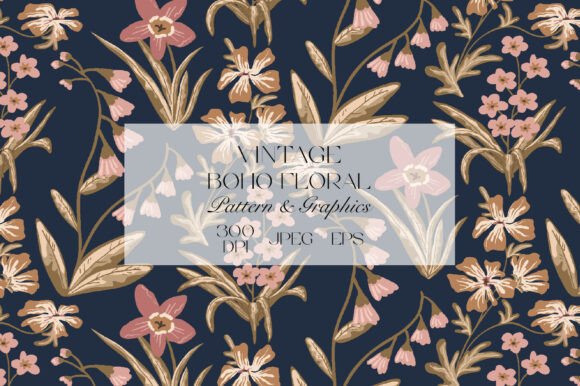
This design style, characterized by delicate retro-inspired flowers, flowing botanical stems, and earthy neutral tones set against a deep navy background, offers a refined alternative to the often oversaturated floral markets. Its utility extends far beyond simple decoration. When approached with a process-oriented mindset, this pattern becomes a foundational component in projects involving fabric collections, wallpaper design, packaging, and comprehensive branding suites. The following guide explores how to prepare, implement, and optimize this asset within real-world creative and business workflows.
Strategic Preparation and Asset Verification
Before integrating any design asset into a production pipeline, thorough preparation ensures compatibility and prevents costly revisions later in the process. When working with a Vintage Boho Floral Seamless Pattern, the initial phase involves verifying the technical specifications provided in the included files. Typically, these assets come as a seamless pattern EPS file and a high-resolution JPG file at 300 DPI quality.
For vector-based workflows, such as creating large-scale signage or scalable textile prints, the EPS file is the primary resource. It allows for infinite scaling without loss of resolution, which is critical when adapting the pattern for different mediums, from small stationery items to expansive wall coverings. Conversely, the high-resolution JPG serves immediate needs in digital mockups, social media content, or rapid prototyping where vector editing is not required.
Organizing these files within a structured directory system is a best practice for efficiency. Establish a folder hierarchy that separates source files, working drafts, and final exports. This organization facilitates version control, especially when the pattern is used across multiple projects simultaneously, such as a cohesive product launch involving both physical packaging and digital advertising materials.
Application in Textile and Surface Design
The most direct application of this pattern lies in textile and surface design. The seamless repeat design is engineered to tile infinitely, making it ideal for fabric creation. In a professional setting, the workflow begins with importing the EPS file into industry-standard software like Adobe Illustrator or specialized CAD programs used in fabric manufacturing.
Designers must consider the scale of the repeat relative to the end product. A pattern that looks balanced on a digital screen may appear too dense or too sparse when printed on a bolt of fabric. Adjusting the scale while maintaining the integrity of the delicate retro-inspired flowers is a crucial step. The deep navy background provides a strong contrast that highlights the earthy neutral tones, but color separation settings must be checked carefully if the production method involves screen printing or rotary printing.
Furthermore, this pattern fits seamlessly into collections. It can serve as the hero print in a larger series, complemented by coordinating solids or smaller-scale geometric patterns derived from the same botanical elements. This approach ensures a unified look across a home decor line, allowing consumers to mix and match items like curtains, upholstery, and bedding while maintaining a consistent bohemian aesthetic.
Enhancing Brand Identity and Packaging
Beyond textiles, the Vintage Boho Floral Seamless Pattern is a potent tool for branding and packaging, particularly for businesses targeting a demographic that values artisanal quality and feminine sophistication. In the context of brand development, this pattern can be applied to various touchpoints to create a memorable unboxing experience.
For packaging projects, the pattern works exceptionally well on wrapping paper, box exteriors, and tissue paper. The workflow here involves adapting the seamless repeat to fit specific die-lines. Unlike fabric, where the pattern flows continuously, packaging requires precise alignment to ensure the floral motifs do not get cut off awkwardly at seams or folds. Using the vector file allows designers to manipulate the layout strategically, placing key floral elements in focal areas of the package.
In terms of branding collateral, such as business cards, letterheads, and lookbooks, the pattern adds warmth and depth without overwhelming the primary information. It acts as a subtle texture or a bold border, depending on the opacity and placement. For digital applications, the pattern can be used as a background for website headers, email newsletters, or social media templates. However, care must be taken to ensure text readability; overlaying white or light-colored typography on the deep navy background usually yields the best results, preserving the accessibility and professionalism of the communication.
Workflow Integration for Digital and Print Media
Integrating this asset into a mixed-media workflow requires an understanding of color management and resolution requirements. The transition from screen to print often presents challenges regarding color fidelity. The earthy neutral tones and deep navy must be converted accurately from RGB (used for digital displays) to CMYK (used for printing) or Pantone spot colors for specialized runs.
When preparing files for print vendors, always supply the 300 DPI JPG or the native EPS file, depending on the vendor's specification. Include a physical or digital proof to verify that the "vintage" look translates correctly and that the details of the flowing botanical stems remain crisp. Blurring or pixelation can detract from the perceived quality of the final product.
For digital-only projects, such as scrapbooking apps, digital paper collections, or printable planners, the focus shifts to file size optimization and tiling behavior. While the source file is high quality, exporting web-ready versions ensures faster load times for users downloading the assets. Creating swatches or previews that demonstrate the seamless nature of the repeat helps customers visualize the end result before purchase or implementation.
Maximizing Versatility Across Projects
The true value of a Vintage Boho Floral Seamless Pattern lies in its versatility. It is not limited to a single industry or output. Educators and content creators can use it to design engaging worksheets or presentation backgrounds that evoke a sense of calm and creativity. Hobbyists involved in scrapbooking or journaling can utilize the pattern for custom papers, adding a personal, handcrafted touch to their memories.
From a business perspective, leveraging this pattern across multiple channels reinforces brand recognition. Consistency is key. If a boutique uses this pattern on their shopping bags, it should also appear on their website's footer and their Instagram story highlights. This repetition builds a cohesive brand world that feels intentional and curated.
Moreover, the pattern can be modified to suit seasonal campaigns without losing its core identity. By adjusting the color balance or overlaying seasonal graphics, the base floral design can feel fresh for spring collections or cozy for autumn releases. This adaptability extends the lifecycle of the asset, providing long-term value and reducing the need for constant new design purchases.
Quality Control and Final Execution
Regardless of the application, a rigorous quality control process is the final gatekeeper before execution. Check for alignment errors in the seamless repeat, ensuring there are no visible seams or discontinuities in the floral flow. Verify that the contrast between the neutral tones and the navy background meets accessibility standards, particularly for text-heavy applications.
Engage with stakeholders or clients early in the process to confirm that the aesthetic aligns with their vision. Present mockups that show the pattern in context—on a fabric swatch, a wrapped box, or a mobile screen—rather than just as a flat tile. This contextual visualization helps in making informed decisions about scale, color, and placement.
Ultimately, the successful integration of the Vintage Boho Floral Seamless Pattern depends on treating it as a dynamic component of a larger system. By respecting its technical properties, understanding its aesthetic implications, and applying it with strategic intent, creators and businesses can elevate their projects with a touch of timeless elegance. Whether the goal is to launch a new fabric line, rebrand a boutique, or create beautiful stationery, this pattern offers the structural beauty and artistic depth needed to achieve professional, polished results.