Evaluating Dark Background Watercolor Floral Patterns for Professional and Creative Projects
In the evolving landscape of digital design, the choice of background texture can fundamentally alter the mood and effectiveness of a visual composition. Among the myriad options available to designers, crafters, and content creators, the Dark Background Watercolor Floral Pattern has emerged as a distinct and versatile resource. Unlike standard light-mode assets or rigid vector graphics, these patterns offer a moody, atmospheric aesthetic that combines the organic fluidity of traditional watercolor painting with the dramatic contrast of deep, saturated backgrounds. Understanding the specific characteristics, applications, and limitations of this style is essential for anyone looking to integrate high-quality textures into their workflow.
Defining the Aesthetic and Technical Characteristics
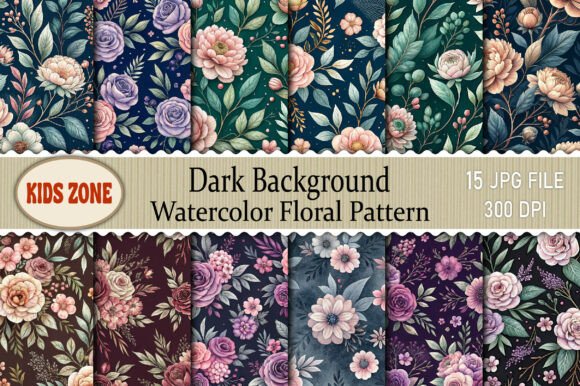
A Dark Background Watercolor Floral Pattern is not merely a flower image placed on a black canvas; it is a specific interplay of light, pigment simulation, and negative space. The defining feature is the use of deep hues—ranging from midnight blue and charcoal to rich burgundy and forest green—as the base layer. Upon this dark foundation, floral elements are rendered using techniques that mimic the transparency and bleeding edges of wet-on-wet watercolor.
The technical execution of these patterns is critical to their utility. High-quality versions, such as those found in professional downloadable packs, typically adhere to strict resolution standards. For instance, a robust collection will include files at 300 DPI (dots per inch), ensuring that the delicate gradients and soft edges remain crisp even when printed at substantial sizes, such as 12 x 12 inches. This resolution is the industry standard for professional printing, distinguishing premium assets from low-resolution web graphics that may appear pixelated or muddy when scaled. Furthermore, the delivery format matters; receiving these assets as high-quality JPGs within a single Zip file streamlines the workflow, allowing for immediate integration into design software without the need for complex extraction or conversion processes.
Comparative Analysis: Dark Watercolor vs. Alternative Styles
When evaluating design resources, it is helpful to compare the dark watercolor approach against other common categories to determine the best fit for a specific project.
- Dark Watercolor vs. Light Background Florals: Traditional floral patterns often utilize white or pastel backgrounds. While effective for spring-themed or airy designs, they lack the immediate drama and depth of dark variants. Dark background patterns allow colors to "pop" with higher luminance contrast, making them superior for projects requiring a focal point or a sense of luxury.
- Watercolor vs. Vector Graphics: Vector illustrations offer infinite scalability and clean lines, which are ideal for logos or technical diagrams. However, they can sometimes feel sterile or overly digital. The watercolor style introduces organic imperfections, texture, and a hand-painted feel that vectors struggle to replicate authentically. For invitations, packaging, or artistic backdrops, the emotional resonance of watercolor often outweighs the mathematical precision of vectors.
- Photographic vs. Painted Textures: Real flower photography provides hyper-realism but can be busy and difficult to overlay with text. Watercolor patterns simplify the subject matter, abstracting details into shapes and color washes. This simplification makes dark watercolor patterns more legible when used as backgrounds for typography or UI elements.
Strategic Applications and Best-Fit Scenarios
The unique properties of these patterns make them particularly well-suited for specific industries and use cases where atmosphere and elegance are paramount.
Luxury Branding and Packaging
In the realm of product packaging, particularly for cosmetics, perfumes, or artisanal goods, the dark watercolor aesthetic conveys sophistication. The deep background suggests exclusivity, while the floral motif adds a touch of nature and softness. When printed on matte or textured cardstock, the 300 DPI resolution ensures that the subtle variations in the "paint" are visible, enhancing the tactile experience of the package.
Digital Invitations and Event Stationery
For evening events, galas, or weddings with a formal dress code, light and breezy florals may feel too casual. A dark background pattern sets a tone of evening elegance. Designers can overlay gold foil effects or metallic typography onto these JPG files to create striking invitations. The 12 x 12 inch dimension provided in many high-quality downloads is perfectly suited for square invitation formats or large-format signage.
Web Design and Social Media Assets
While originally intended for print, these high-resolution JPGs are equally valuable in digital spaces. They serve as excellent hero images or section dividers on websites aiming for a boutique or artistic vibe. Because the background is already dark, they naturally support "dark mode" interfaces, reducing eye strain for users while maintaining visual interest. Content creators can also use these patterns as backgrounds for quote cards or promotional posts, where the high contrast ensures text readability.
Limitations and Decision Factors
Despite their versatility, dark background watercolor patterns are not a universal solution. Several factors must be weighed before committing to this style.
Text Legibility Challenges: The primary limitation is contrast management. While the dark background offers great contrast for white or light-colored text, it can render dark text invisible. Designers must carefully select font colors and weights. If a project requires heavy blocks of dark text, a light background or a heavily blurred version of the pattern may be necessary.
File Format Constraints: It is important to note that many premium packs, including those offering 15 high-quality files, often distribute assets as JPGs rather than PNGs with transparent backgrounds. While JPGs are universally compatible and smaller in file size, they do not support transparency. This means the dark background is baked into the image. If a designer needs to place the floral element over a different colored background or a complex layout, they would need to use masking tools in software like Photoshop to remove the background, which can be time-consuming and may affect the soft watercolor edges. Users seeking immediate plug-and-play flexibility across varying background colors should verify if transparent PNG alternatives are available or be prepared to perform manual editing.
Mood Appropriateness: The psychological impact of dark colors is significant. While elegant, dark themes can sometimes be perceived as somber or serious. For brands or projects aiming to communicate energy, youthfulness, or affordability, a bright, vibrant palette might be more aligned with the messaging than a moody, dark floral scheme.
Making an Informed Selection
Choosing the right asset involves balancing aesthetic goals with practical constraints. When selecting a Dark Background Watercolor Floral Pattern pack, prioritize collections that explicitly state their resolution (300 DPI) and dimensions. A collection of 15 unique files offers sufficient variety to maintain consistency across a brand identity without becoming repetitive. Additionally, verifying the delivery method—such as a single Zip file for easy organization—can save valuable administrative time.
Ultimately, the decision rests on the desired emotional response of the audience. If the goal is to evoke mystery, luxury, depth, or artistic refinement, the dark watercolor approach is unmatched. However, if the project demands high-volume text legibility, transparent layering capabilities, or a cheerful, lightweight tone, alternative styles such as line art, vector flats, or light-background photography may serve the objective better. By understanding these trade-offs, creators can leverage the dramatic beauty of dark watercolor florals effectively, ensuring their final output resonates with professionalism and intent.